If you have walked Kapukaʻulua since late July, you may have seen the changes. Ironwoods have been scheduled for cutting level with the sand. Roped-off pockets of native plants were planned for the main entrance. The pavilion that stood for years is gone, and the beach has been narrowing since September. All of it comes from one decision. The County of Maui, the University of Hawaiʻi Sea Grant College Program and their partners chose to stop putting structures back at Baldwin Beach. They are letting native plants rebuild the dunes on their own, and the next few weeks are when the ocean starts to help.
The Narrow Beach Is Right on Schedule
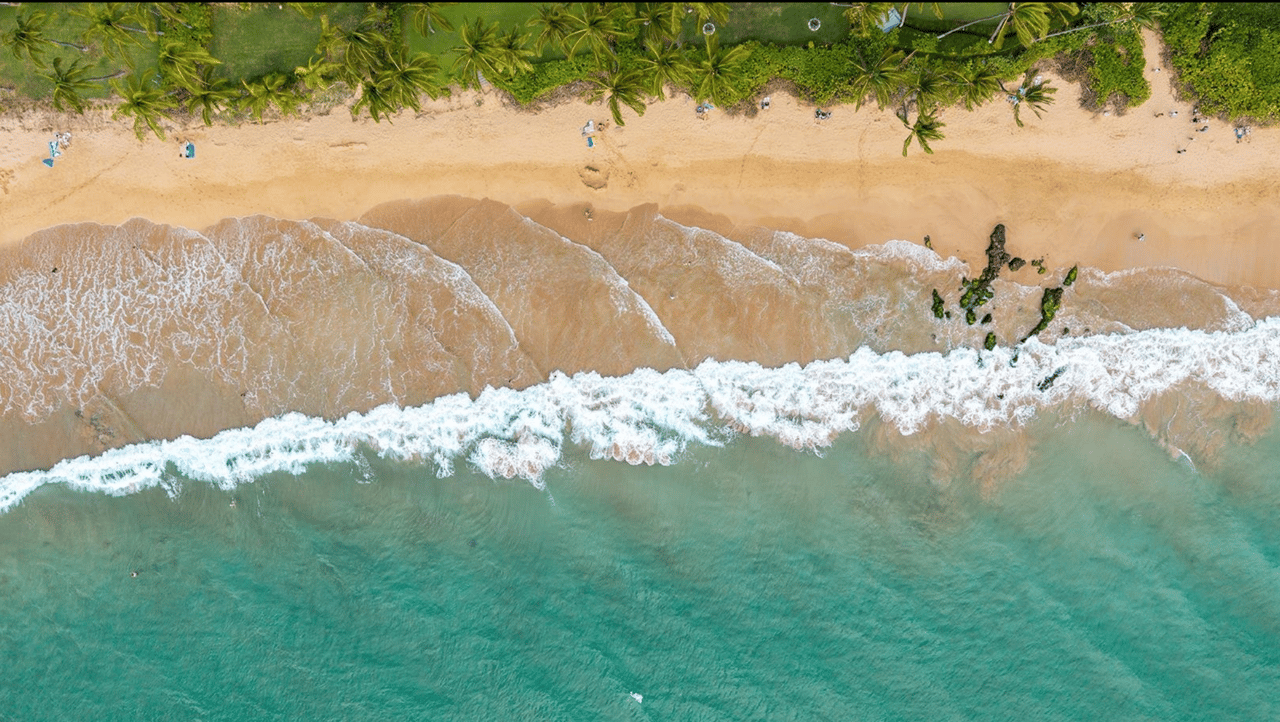
The beach looks thin right now because of the calendar. Tara Owens, an extension agent with UH Sea Grant, explained the cycle to The Maui News in July. Through spring and summer, the northeast trade winds push waves and sand from east to west along this shoreline. Erosion usually peaks around the end of August or the start of September. Then the winter swells arrive, and in Owens' words, "That's when the sand gets pushed back from west to east."
The same Maui News report noted that Baldwin is close to its widest during the spring and summer season and begins to narrow around September. So the beach you walk in late October is near the bottom of its yearly swing. Earlier this year, the beach near "the cove" widened by at least 100 feet. The sand moves a long way back and forth over a single year.
A Shortfall That Began With Sugar
Under that yearly swing is a much older loss of sand. Starting in the early 1900s, sand was mined along this stretch for decades and used to make hydrated lime for sugarcane soil and for concrete. Hawaiʻi Sea Grant's Maui Dune Program says Kapukaʻulua has some of the highest erosion rates on Maui. It points to that history of sand mining, along with invasive plants, changing coastal conditions and a lack of targeted management.
You can still see one part of that history from the sand. The black boulders that jut about 100 feet into the ocean are a rock revetment built around the old Pāʻia lime kiln. "The beach used to be out there," Owens told The Maui News. "That's the former position of the shoreline back in the early 1900s." She explained that the revetment blocks sand that would otherwise travel along the shore, leaving "this sort of deficit right here." Because so much sand was taken out over the decades, she said, this beach eroded faster than anywhere else on the island.
So the sand that comes back each winter returns to a beach that is still short of what it held a century ago.
Why the Pavilion Stayed Gone
The pavilion was removed in September 2024 after irreparable wave damage. The restoration team chose not to rebuild it. Its old footprint became a test.
The pavilion left a dip in the sand when it came out. The team planted native groundcover there, and the plants caught windblown sand until the dip turned into a mound. "The plants keep growing up and accumulate more sand," Owens said in the same Maui News report. "They can accept the wind, the sun, the waves, and they won't die."
An earlier pilot shows what a full recovery could look like. Near the Pāʻia Youth and Cultural Center, new native growth built up enough height to stop waves from washing into Lower Pāʻia Park.
"It's a good model for what we hope the endpoint would be for all of Kapukaulua. We've gained a lot of elevation there, and now the waves don't wash into the park." — Tara Owens, UH Sea Grant, speaking to The Maui News
The same approach also reached Lower Pāʻia Park itself. In October 2025, the County scheduled a volunteer planting there with 750 native coastal plants.
The Summer's Work, Phase by Phase
With the pilots showing results, the work spread down the beach this year. On July 15, 2026, the County Department of Parks and Recreation announced phased closures at H.A. Baldwin Park. The work covered removing hazardous and invasive vegetation, clearing debris and adding pathways and plantings. The County said the schedule could change with the weather:
| Window | Phase | Work scheduled |
|---|---|---|
| July 27–31 | Phase I | Flush cutting of hazardous trees next to the Pāʻia Youth and Cultural Center |
| Aug. 3–21 | Phase II | Flush cutting of trees across H.A. Baldwin Park |
| Aug. 24–Sept. 4 | Phase III | Creating kīpuka, or pockets of native plantings, with some restrictions at the main entrance |
| Sept. 7–18 | Phase IV | More clearing and flush cutting, plus removal of stumps and shoreline debris between Lower Pāʻia Park and Baldwin Beach Park |
| After bird-nesting season in November | Final phase | Pruning and flush cutting of trees where sensitive species may have been identified |
The stumps are cut level with the ground on purpose. Flush cutting means the invasive trees are taken down to ground level. The County said no excavation or grinding was planned, to limit environmental and cultural impacts. The County Department of ʻŌiwi Resources leads cultural and archaeological monitoring. That work follows an Archaeological Monitoring Plan reviewed by the Office of Hawaiian Affairs and approved by the State Historic Preservation Division, and biological monitors check that no species of concern are present while work is underway.
Owens told The Maui News that the ironwoods are being cut selectively, from the youth center to the old lime kiln site, and replaced with patches of native plants. Some of the trees are close to falling. Their fallen needles also smother the plants underneath, and that stops dunes from forming naturally.
What's Growing in the Roped-Off Pockets
Those roped-off kīpuka hold the plants doing the building. The team relies mainly on native vines and grasses adapted to the shoreline:
- Pōhuehue, the beach morning glory, a trailing vine
- ʻAkiʻaki, a native dune grass
- ʻĀkulikuli, a low succulent groundcover
The plan calls for marked pathways to the beach that route around these roped-off areas. Owens said native groundcover is the preferred tool because it needs less upkeep over time. Three County parks workers maintain the restoration sites, and community workdays can draw 30 to 40 volunteers.
The light touch was shaped by community input. The team has met with community members and cultural advisors since 2018, and the plans changed along the way. After feedback from the Maui Burial Council, a proposal to reshape an exposed clay bank was dropped. Near the Maui Country Club, a plan to move sand from the top of a dune blowout into the main park was set aside. "There was some discomfort with that in our community," Owens told The Maui News, "so ultimately we decided to pause that for now and just work with the typical dune restoration tools starting with plants, pathways and perimeters." Community members and project partners also meet monthly to record seasonal changes along the shore.
The Reach of the Project
The project is bigger than the main park. Sea Grant and the County Parks Department have mapped seven restoration zones, from Lower Pāʻia Park to Wawau Point, which many people know as Baby Beach. Funding comes from a National Fish and Wildlife Foundation grant through its National Coastal Resilience Fund. The Maui News put the grant at more than $1 million. The County names the Surfrider Foundation Maui Chapter as a collaborator, and Owens named Eco Management and Design Services as a partner on the work. Sea Grant says community members, cultural practitioners, scientists and local partners have been observing and planning at this shoreline for more than a decade.
Maps and updates are on the project's StoryMap, and Sea Grant keeps an email list for anyone who wants notices about future workdays.
The Next Few Weeks at Kapukaʻulua
Two things are coming up on the calendar. The last round of tree work waits until bird-nesting season ends in November. It covers trees in areas where sensitive species may have been found, so expect some new closures and signs once that work is scheduled. The County asks beachgoers to follow signs and barriers and to stay out of closed areas. Beach access stays open while the work is done.
On Nov. 13, 2026, the project holds its Dune Restoration Celebration. The event flyer invites the community to join the County Department of Parks and Recreation, UH Sea Grant and partners at the Pāʻia Youth and Cultural Center to celebrate the ongoing coastal resilience work.
Between now and then, the winter swells start pushing sand back from west to east. This year, that returning sand lands on rows of pōhuehue and ʻakiʻaki planted to hold on to it.
I grew up with this stretch of the North Shore, and the work at Kapukaʻulua is one of the more hopeful things happening along it. If you're curious how coastal changes like these show up for homes and parcels near Pāʻia and Kuʻau, I'm always happy to talk through it, with no pressure. Caleb A. Palmer. Let's Connect.